
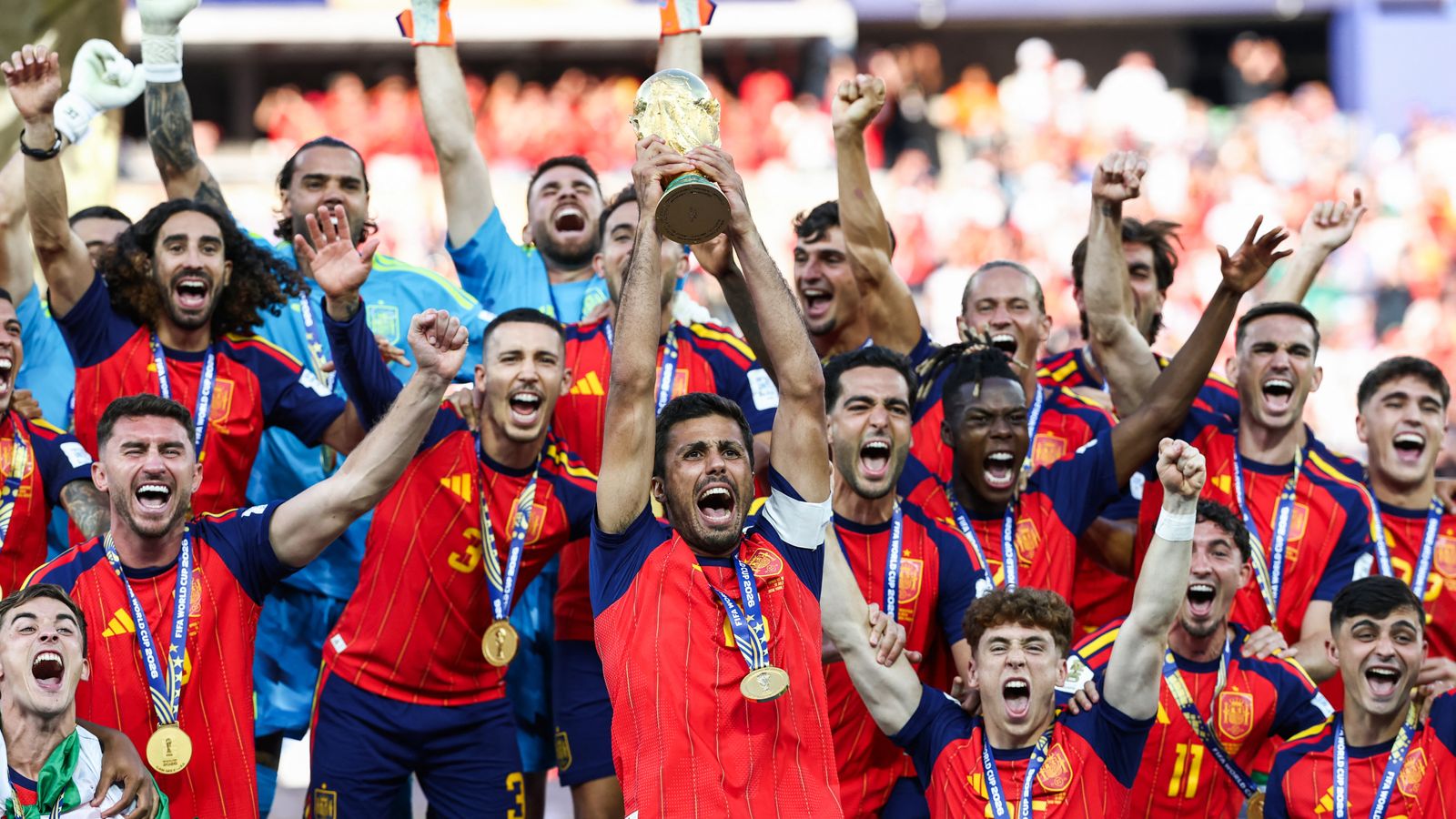
Spain are World Cup champions after a 1-0 extra-time win over Argentina, sealed by Ferran Torres’ late decisive strike. The final was defined less by drama than by control: Spain took all 20 shots and kept Argentina largely pinned back.
The numbers from the tournament support the broader argument. Spain had more of the ball in every match, conceded only once, and reached the final after beating France in the semi-final. Their opening draw with Cape Verde may have looked uncertain, but the same passing identity was already visible there.
Luis de la Fuente’s side also showed that this was not simply about one star player. Rodri was named Player of the Tournament, Unai Simón won the Golden Glove and Pau Cubarsí took the Young Player award, but the team’s strength came from its structure, depth and collective patience.
For editors, the key angle is whether this title marks a renewed peak for Spain’s footballing model. Their second World Cup sits alongside the 2010 triumph and recent European Championship success as another argument for possession, positional play and long-term stylistic continuity.
Discussion
Sign in to join the discussion.
Sign in / Register