
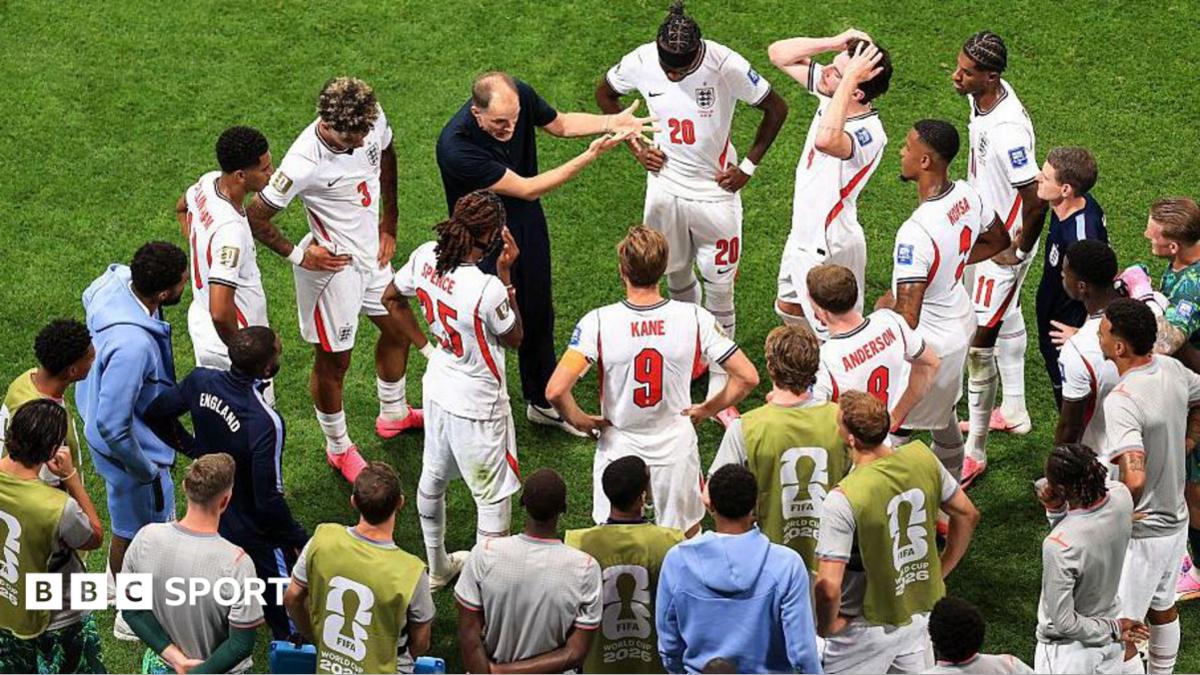
England are through to the World Cup last 16 after a 2-1 comeback win over DR Congo, with Harry Kane scoring twice in the final 15 minutes. The hydration breaks appeared to coincide with England’s improvement, though the source does not prove they caused the turnaround.
England had fallen behind in the seventh minute and started poorly, failing to register a shot or a touch in the opposition box before the first break. By half-time, the article reports they had eight shots and 20 touches in the area, suggesting Tuchel’s mid-half intervention came at a useful moment.
A similar pattern was noted after the second break: England increased their attacking output, pushed higher, found more room wide and eventually turned pressure into goals. Tuchel said he does not especially like the interruptions, but used them as a chance to give clear instructions while his players were calm and receptive.
The wider debate remains unresolved. FIFA views the breaks as useful for player welfare and coach communication, while some supporters see them as disruptive or overly commercialised. For editors, the key angle is not that hydration breaks won England the match, but that they have become a tactical and cultural flashpoint at this tournament.
Discussion
Sign in to join the discussion.
Sign in / Register