World CupIvory Coast -- Norway17:00World CupFrance -- Sweden21:00World CupMexico -- Ecuador01:00World CupEngland -- Congo DR16:00World CupBelgium -- Senegal20:00World CupUSA -- Bosnia & Herzegovina00:00World CupSpain -- Austria19:00World CupPortugal -- Croatia23:00World CupSwitzerland -- Algeria03:00World CupAustralia -- Egypt18:00World CupArgentina -- Cape Verde Islands22:00World CupColombia -- Ghana01:30World CupCanada -- Morocco17:00World CupNetherlands 11 MoroccoFTWorld CupIvory Coast -- Norway17:00World CupFrance -- Sweden21:00World CupMexico -- Ecuador01:00World CupEngland -- Congo DR16:00World CupBelgium -- Senegal20:00World CupUSA -- Bosnia & Herzegovina00:00World CupSpain -- Austria19:00World CupPortugal -- Croatia23:00World CupSwitzerland -- Algeria03:00World CupAustralia -- Egypt18:00World CupArgentina -- Cape Verde Islands22:00World CupColombia -- Ghana01:30World CupCanada -- Morocco17:00World CupNetherlands 11 MoroccoFT
Back to news
formula1

Russell’s Austrian GP pole raises fresh questions over yellow-flag judgment

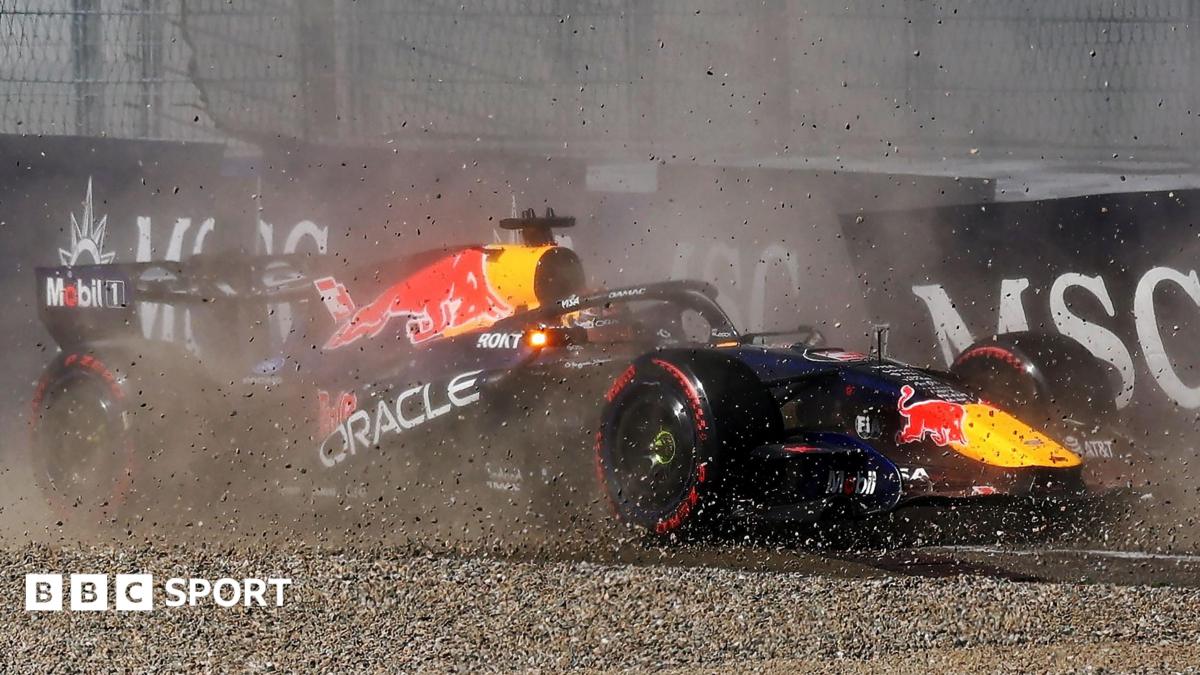
George Russell’s Austrian Grand Prix win was built on a pole lap that complied with the stated single-yellow rules, but the handling of Max Verstappen’s Turn Nine crash has renewed debate over whether race control should react more cautiously at high-speed corners.

Russell’s Austrian GP pole raises fresh questions over yellow-flag judgment
Image credit: bbc.co.uk

George Russell won the Austrian Grand Prix from pole, and the available account says his qualifying lap did not breach the single-yellow requirements in place after Max Verstappen crashed at Turn Nine. The controversy is not whether Russell broke the described rule, but whether a single yellow was the right initial response to a car in the barriers at a very fast corner.

The key distinction matters: under the protocol described in the source, a single yellow does not automatically force a driver to abandon the lap, while a double yellow requires a much more cautious response. Kimi Antonelli backed off after interpreting the signal as double yellow, while Russell was still able to complete a lap strong enough for pole after avoiding a fastest sector in the affected area.

That sequence has left the bigger safety question unresolved. Verstappen and Antonelli both challenged the initial flag decision, and race control reportedly moved to double yellow shortly afterwards, but only after the decisive laps had already been completed.

The Austrian weekend also reshaped the competitive picture. Russell’s victory moved him back to second in the standings, 40 points behind Mercedes team-mate Antonelli, while Ferrari’s fifth and eighth place finishes after strong grid positions suggested that Barcelona may have been more of an exception than a new baseline. For editors, the safest angle is less about accusing any driver and more about whether F1 needs clearer escalation standards when qualifying incidents happen at high speed.

Sources & copyright

This article does not reproduce any source in full. It is built from public facts and editorial work; original links belong to their authors.

Public sources

This article may use AI for summarization, translation, or SEO assistance, and is reviewed by editors before publishing.

Discussion

    Related reading

    News
    Aston Martin’s Hungary upgrade becomes a key test for Newey’s rebuild
    Editorial1 min
    News
    Russell win sharpens Austrian GP title picture as Verstappen recovers
    Editorial1 min
    News
    British Grand Prix: BBC coverage times for Silverstone sprint weekend
    Editorial1 min
    News
    BBC’s Chequered Flag turns focus to Russell after Austrian GP
    Editorial1 min